Introduction
The first time I pulled the bark off my juniper with pliers, I still remember the faint cracking sound of the wood. It was half satisfying, half nerve-wracking. My hands were shaking a little, because even one small mistake could mean permanent damage to a living branch.
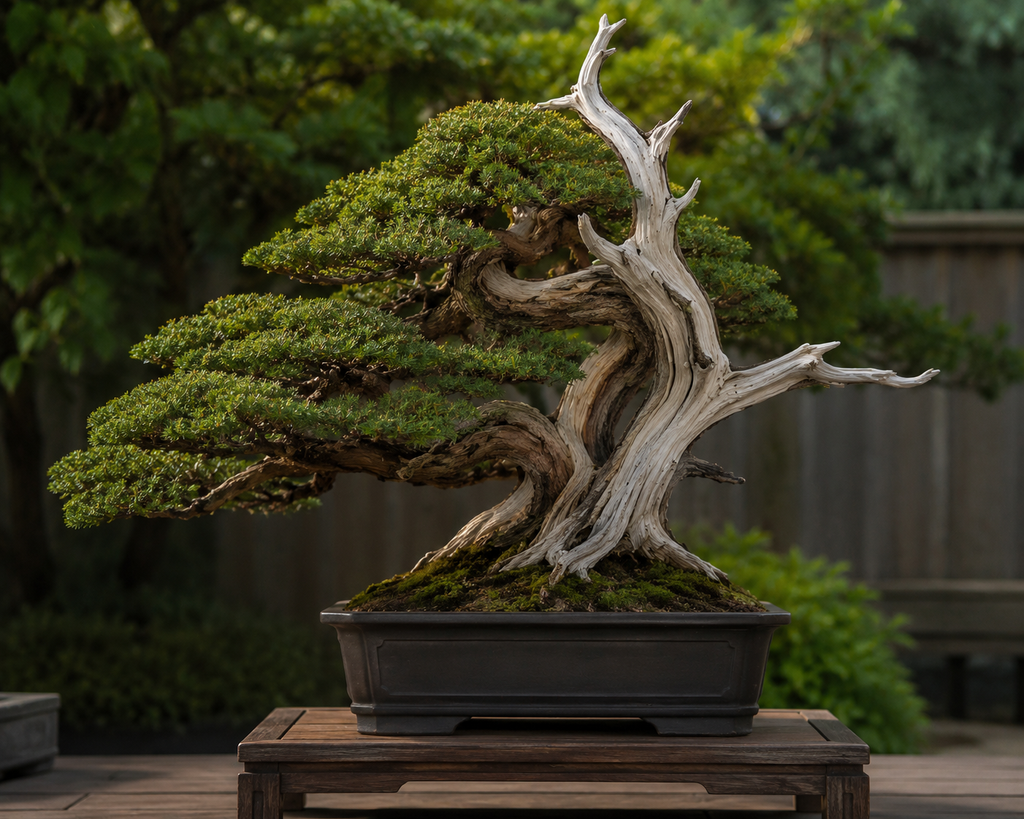
In the world of bonsai, Jin and Shari are considered two of the most dramatic and beautiful techniques.
What Jin and Shari Are
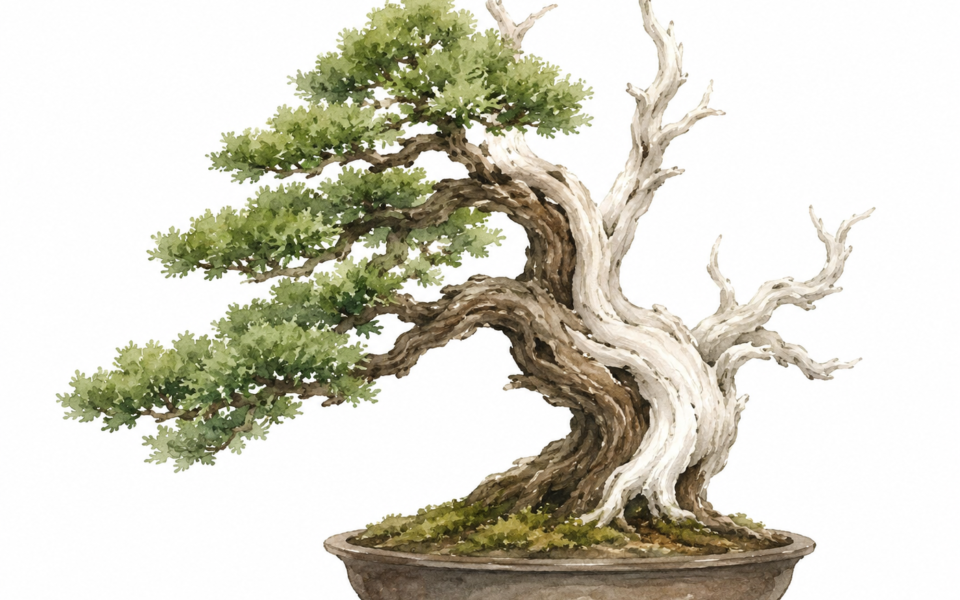
Jin is done on a branch. When a branch is removed or dies, its bark is completely stripped away and the wood is shaped to look dry and bleached white. That’s Jin.
Shari is done on the trunk. Here, a strip of bark is removed from part of the trunk, so one side of the tree stays alive while the other shows dry, exposed deadwood.
Tools Needed
In the beginning, we all think the same thing: buy a cheap tool and the work will get done. But when a cheap jin plier leaves the bark half pulled and you’re forced to bend and break it off by hand, that’s when it hits you that a good tool is worth it.
Cheap tools damage the edges of the wood and make them look rough. There’s also a real risk of damaging the cambium layer of the tree.
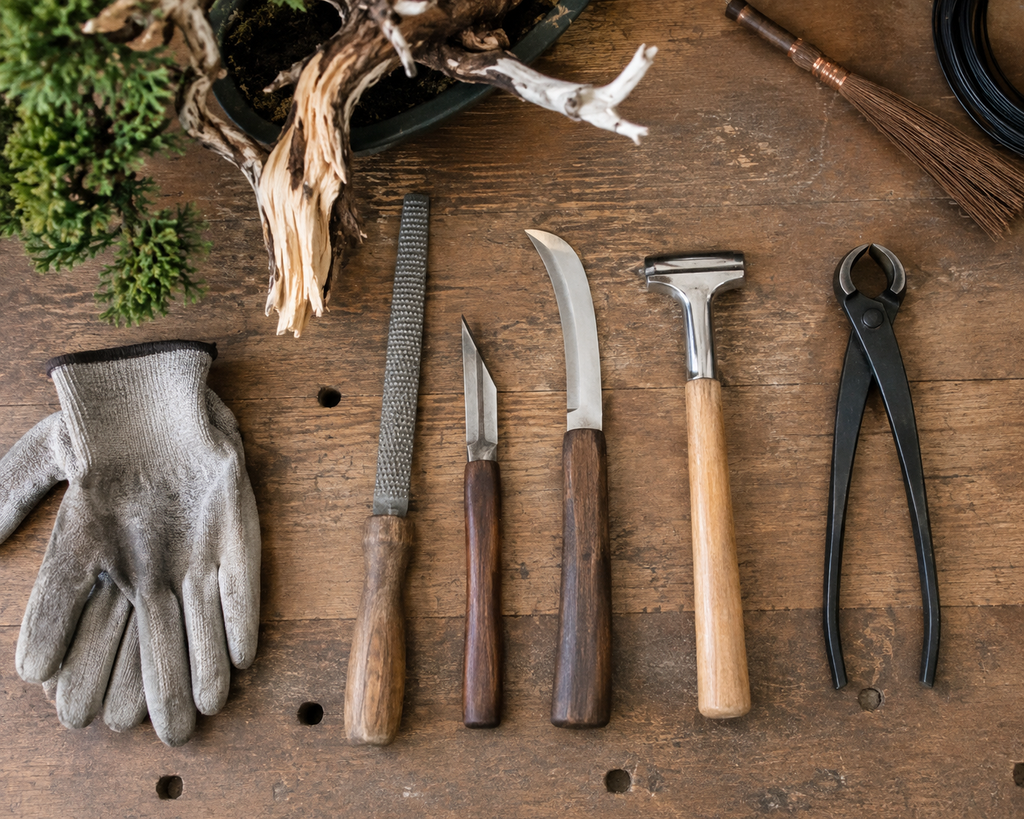
My own experience: spend a little extra money once, and get a good tool that lasts for years and never lets you down.
Creating Jin
Choosing the Branch
Making Jin is a beautiful art. Done with your own hands, it gives the plant new life. Let’s walk through the process.
First, look at the plant carefully. Choose a branch that’s already drying out or hurting the overall look of the tree. From experience, always pick branches that are bent and uneven. Completely straight branches don’t look natural, and they’re also more likely to snap in the wind.
Deciding the Length
Before you pick up the tool, have a clear picture in your mind of how much should look alive and how much should look dry.
Don’t rush the cut, and never cut it all the way in one go. Keep the length longer than you think you need at first. If the Jin ends up too long, it’s easy to shorten later. But cut it too short from the start, and there’s no way to reattach the wood. Shorten it gradually, in a way you can still correct.
Removing the Bark
Removing the bark takes patience, but it’s genuinely enjoyable work. Using jin pliers, make a small cut at the base of the branch. Hold the bark firmly and pull it forward while twisting.
Always pull in the direction of the wood grain. Go against it, and the wood can snap unevenly from the middle.
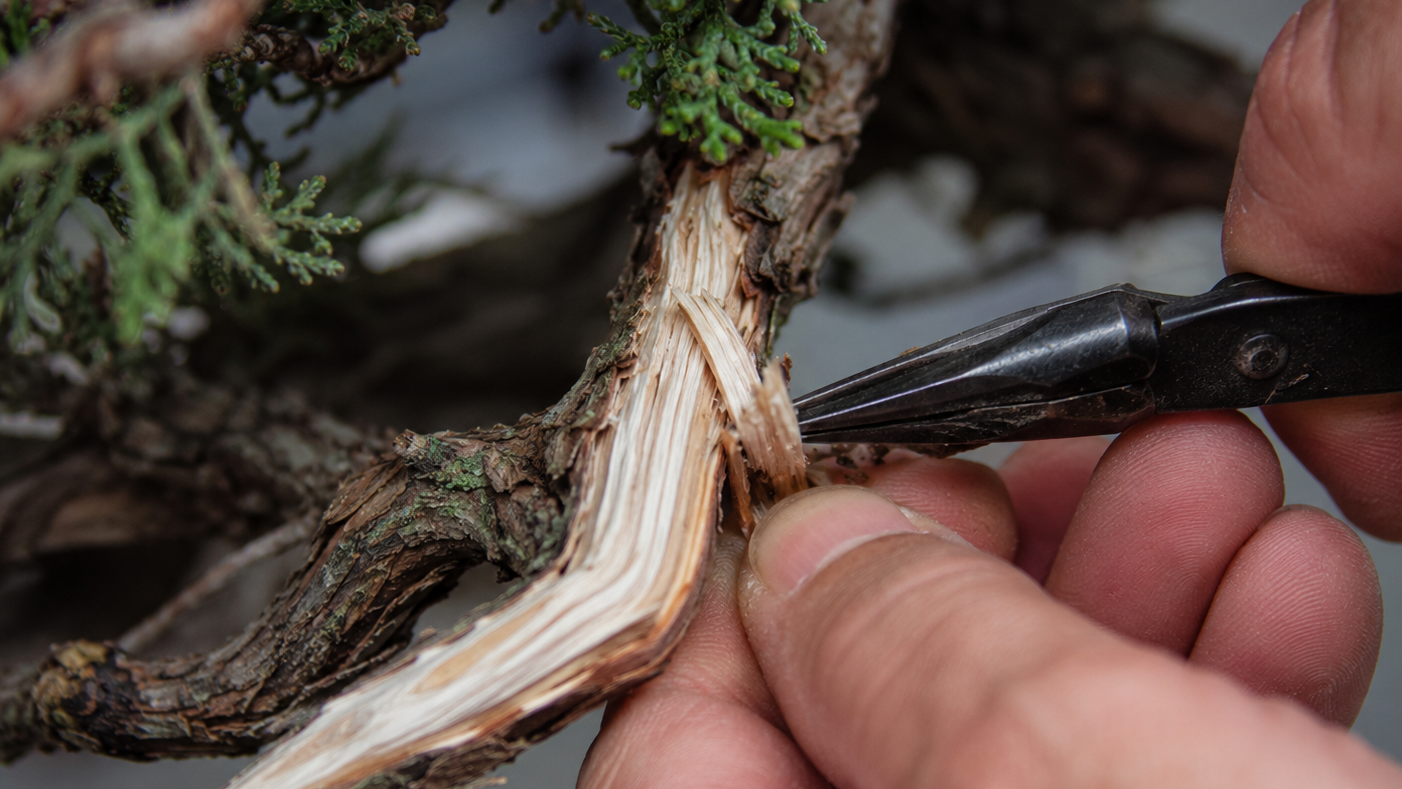
When the bark comes away, the natural scent of the fresh wood underneath is something else.
Giving the End a Natural Shape
After the bark is gone, the end of the branch usually looks too flat or too round. It shouldn’t. It should look like the wood broke away naturally in a storm.
To get that, split the end slightly with the pliers and pull out a few fibers. This thins the tip and gives it a more natural taper.
Bringing Out the Texture
Once this process is done, you’ll notice a few stray, pointed fibers still clinging to the wood. The fix, one my friend showed me, is to lightly burn the wood with a gas lighter or torch. This burns off the loose hairs and fibers.
Then clean it with a nylon or wire brush. This deepens the natural lines in the wood and gives it an aged look.
The Magic of Lime Sulfur
This part matters most. Left untreated, dry wood absorbs rain and moisture, which leads to fungus and rot. Lime sulfur prevents that.
Applied to wet wood with a brush, it smells like rotten eggs at first. Not pleasant, but good for the wood. Once it dries, the wood turns bright white.
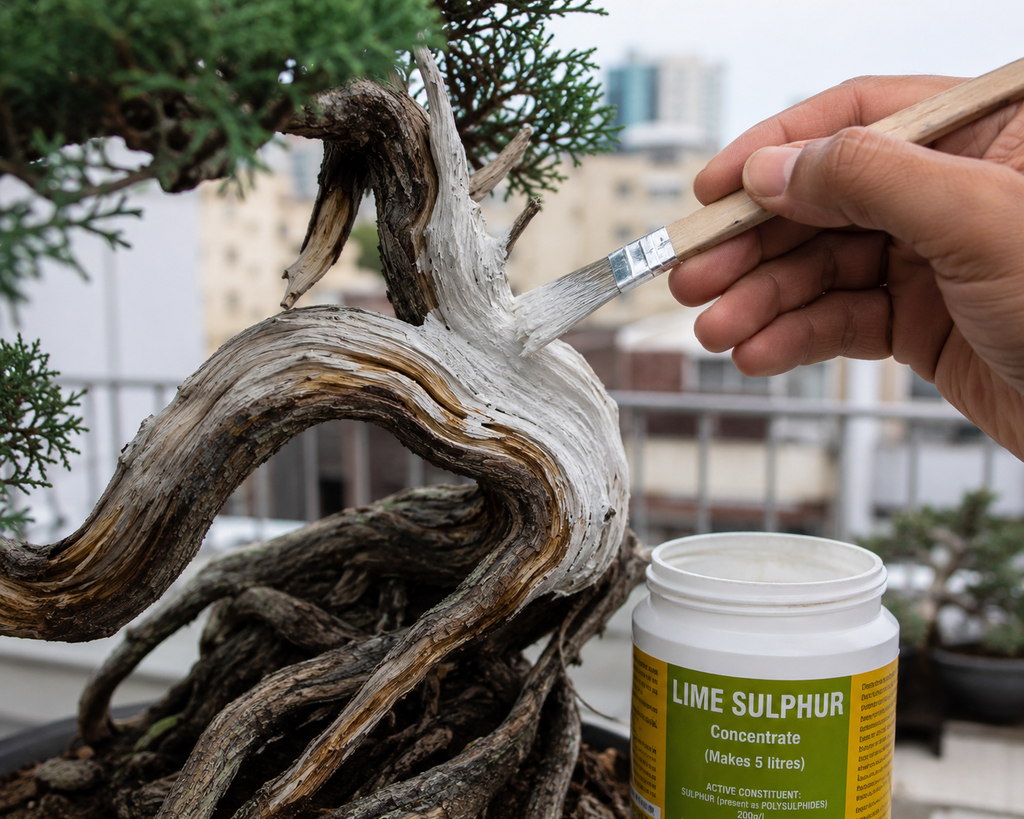
That white Jin against green foliage is what makes a bonsai’s beauty stand out.
My friend’s advice has stuck with me. Early on, I tried to make everything perfectly even, and it backfired: the tree ended up looking plastic and stiff. My friend, more experienced than me, would stop me and explain what I was doing wrong. He used to say, “You’re not peeling wood, you’re wasting time. Loosen your grip and let the wood decide where it wants to break.”
That advice shaped how I work now.
How to Make Shari
Shari is one of the more important techniques in bonsai. It’s beautiful, but it’s risky.
New bonsai growers often get excited and strip too much bark too fast, and the tree pays for it, slowly drying out.
I made plenty of these mistakes early on too. With time and help from other growers, I corrected them and learned how to do Shari properly.
Preparation: Tools and Timing
Right season: Do this work in early spring or after autumn, when the tree is dormant. Never touch Shari while the tree is producing new leaves.
Tools: A sharp carving knife, a round chisel, a wire brush, and lime sulfur.
Step 1: Find the Live Vein
Identifying the living part of the tree, the part carrying food and water up to the leaves, is the most important step.
Look closely at the trunk and mark the veins moving upward with chalk. Never damage these by accident.
Step 2: Follow a Natural Line
Bark never splits in a straight line, whether from lightning or storm damage. So mark an uneven, twisting line that follows the natural movement of the trunk instead of a clean edge.
Step 3: Start Slowly
This step demands patience and self-control. Only remove around 20 to 30% of the bark at a time. Peel it off with a knife, then scrape away the green layer underneath so the area can dry out fully.
Leave the rest for the following year.
Step 4: Smooth the Edges
Freshly cut edges look too sharp and clean. Soften them with a knife or sandpaper so they look like they’ve weathered for years, not just been cut.
Step 5: Protect the Wood
Once the tree has dried out, roughly two weeks in, apply lime sulfur. It protects the wood from rot and fungus, and once dry, gives it that clean white finish.
For at least two to three weeks after making Shari, keep the tree out of strong sun and direct wind. Skip heavy fertilizer during this time too, since the tree is in recovery.
How to Preserve Deadwood: Lime Sulfur
Lime sulfur is what keeps deadwood from rotting, as covered above.
The first time I used it, I made a common mistake: applied it too strong and too thick. The wood turned completely chalk white, almost like it had been painted.
The Right Method
Several light coats work far better than one heavy one. It looks much more natural.
- Fresh cuts: Use a 1:1 ratio, half lime sulfur, half water.
- Maintenance touch-ups: A lighter 1:3 mixture is enough.
A Few Tips
Never apply it indoors or in direct sunlight; the smell is strong. Work outdoors or on a balcony.
Lightly mist the wood with water before applying. It helps the solution soak deeper into the fibers and hides brush marks.
If you don’t want a pure white finish, add a drop or two of black ink to the mix. It gives the deadwood a more aged, natural tone.
Use a small brush, apply it evenly, and let it dry overnight.
One thing to watch closely: keep the chemical away from living tissue and the soil.
Practical Takeaway
If you’re just starting out, don’t practice on your main tree.
Get an inexpensive or unwanted juniper cutting and practice Jin on a small branch first. It’ll teach you how the wood behaves once the bark comes off.
Once your hands feel confident, then move to something bigger and irreversible, like Shari on a tree that actually matters to you.
Because once the bark is gone, it isn’t coming back.
And don’t try to finish everything in one sitting. Go slow, and give the tree room to recover.
Conclusion
Making Jin and Shari isn’t just a technique. It’s a real test of patience and understanding.
The first time you strip bark from a living branch, or try to age the wood convincingly, it won’t be perfect. Mistakes happen.
I was nervous the first time too, mind racing, hands shaking.
Over time, you start understanding how the tree behaves. Those cut, dried pieces of wood begin taking on a natural shape.
Your instincts sharpen. Where to cut, how much to trim, which tool to reach for. All of it comes from the mistakes you make along the way.
Once it clicks, it feels like magic. There’s real satisfaction in seeing it come together, and the tree starts looking decades older than it is.
Keep at it.
FAQ
What is the difference between Jin and Shari on bonsai?
Jin: a branch that has dried out, stripped of bark to look like it’s weathered years of wind and sun. Shari: a strip of bark removed from the trunk, top to bottom, mimicking storm or lightning damage.
Which bonsai species are best for Jin/Shari?
Junipers and pines work best. Their wood holds a lot of natural resin, which keeps deadwood strong for years without rotting.
Is there a risk of the tree dying while making Shari?
Yes, the risk is high. Even a small mistake can cause the whole tree to dry out.
How often should lime sulfur be applied?
First coat, on fresh cuts: a strong 1:1 ratio (or undiluted) to prevent rot and give a clean white color. Maintenance: sun and rain fade it over time, so a light 1:3 mixture once or twice a year keeps it looking right.
