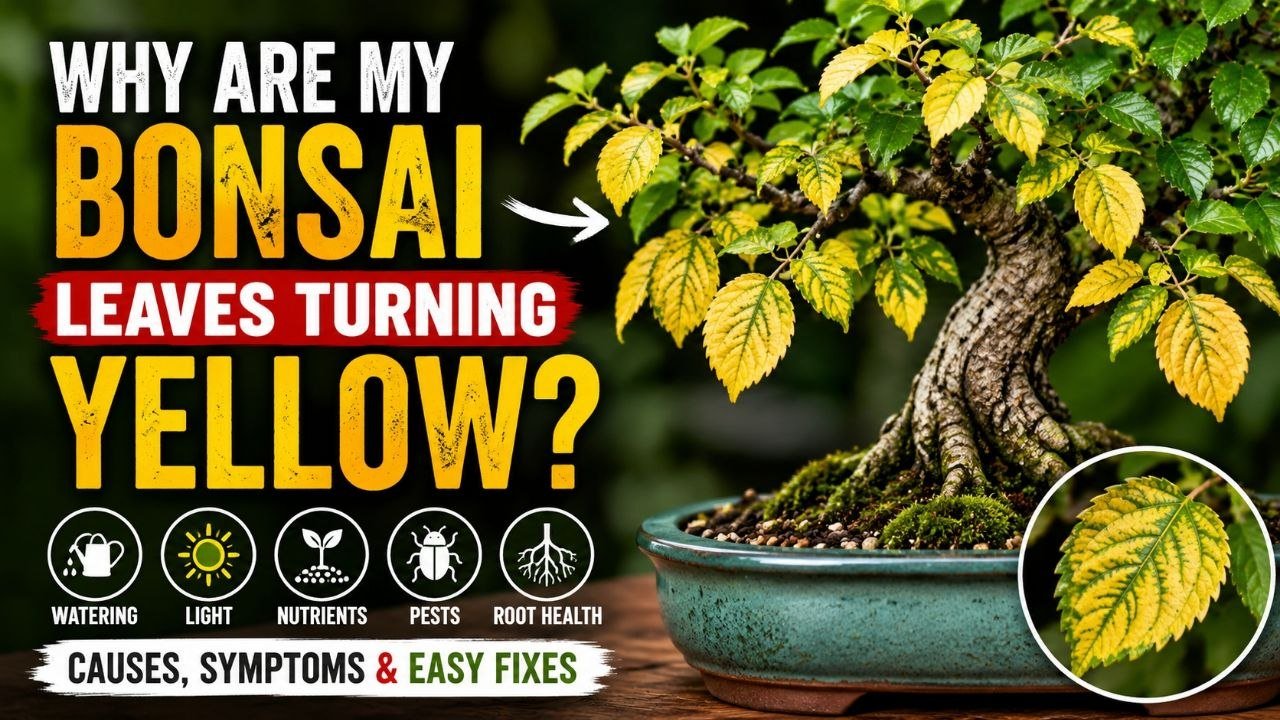
My first bonsai was a little Chinese elm I bought from a mall kiosk because it looked cute on the counter. Three weeks in, half the leaves went yellow, and I panicked so hard I almost repotted it at midnight. Turns out I was just overwatering it out of nervousness. That elm survived my mistake, but a lot of trees don’t get so lucky.
Here’s something nobody tells you when you buy your first bonsai. The soil usually warns you before the leaves do. If you get down close to the pot and catch a slightly sour smell, kind of like a gym bag left in the car too long, that’s often your earliest sign. It can show up days before a single leaf changes color.
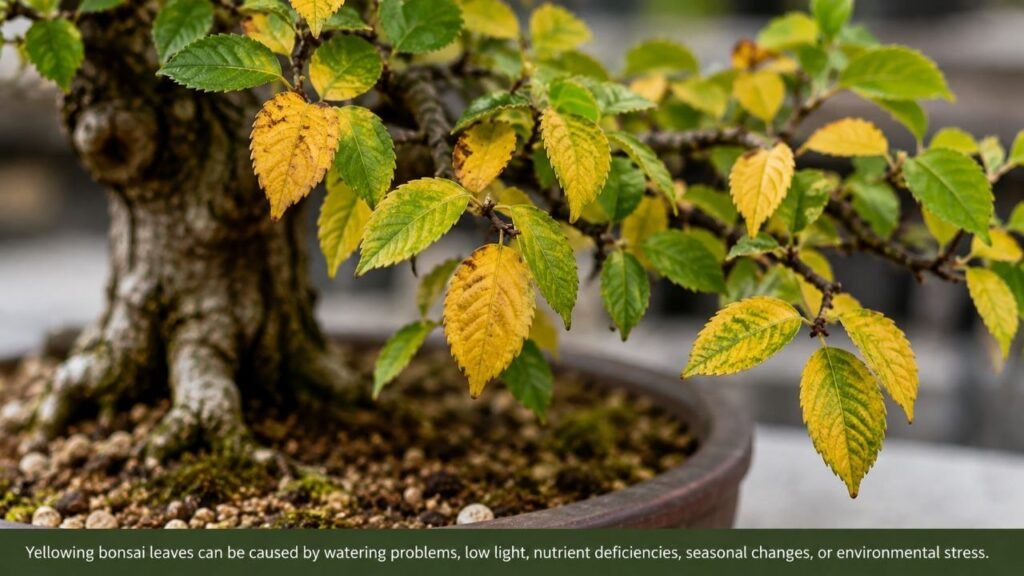
By the time you actually see yellow leaves, the real cause usually started somewhere else entirely. Roots. Light. Something you changed two weeks ago and completely forgot about. And here’s the annoying part: overwatering and underwatering can look almost identical from a few feet away. Guess wrong and you’ll make things worse, not better.
Sometimes Yellow Is Just… Normal
Deciduous trees like Chinese elm, Japanese maple, and trident maple are supposed to go yellow and drop leaves in autumn. That’s just the tree doing what it would do if it were planted in your backyard instead of a shallow pot on your windowsill.
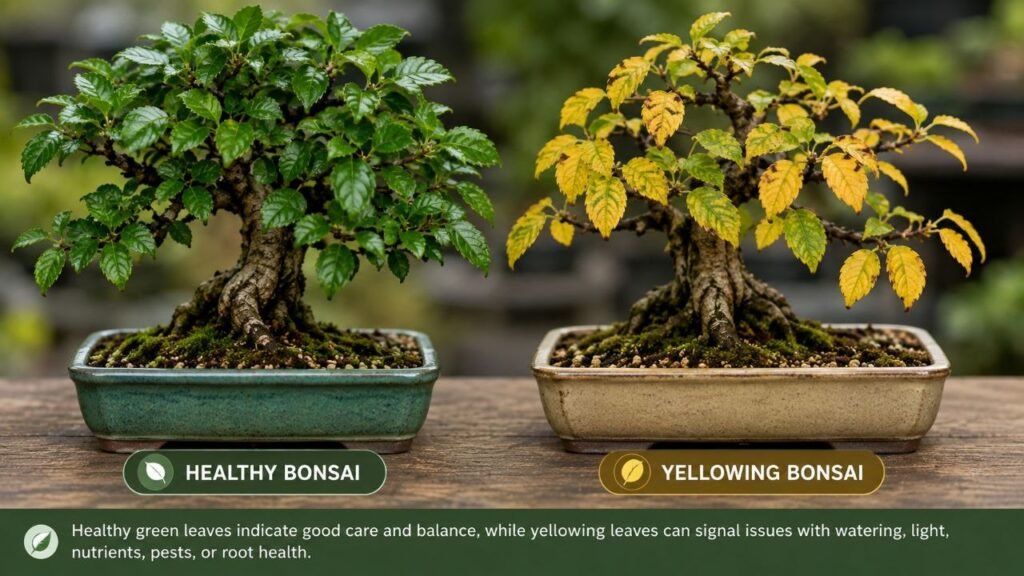
What actually deserves your attention looks different. Yellowing at the wrong time of year. Leaves fading across the whole canopy within a few days. New growth turning yellow before the old growth does. If it’s one older leaf near the bottom slowly losing its color, relax, that’s normal aging. If your tree looks noticeably worse than it did three days ago, that’s when you actually go investigate.
Read the Leaf Before You Panic
Location tells you a lot. Old leaves near the base going yellow usually points to aging, seasonal shedding, or the tree simply running low on nitrogen. New leaves yellowing first is a different story. That’s almost always light or roots, something the tree genuinely can’t fix by itself.
Pattern matters too. A leaf that’s gone evenly yellow all over is usually about light or age. But if you see green veins standing out sharply against yellow tissue, especially on newer leaves, that’s a strong sign of iron chlorosis.
And then there’s speed. A little yellowing that trickles in slowly over a week or two? Background noise, don’t stress. But if a big chunk of the tree turns yellow within just a few days, go check the roots that same day. Don’t wait for the weekend.
Watering: The Mistake Almost Everyone Makes First
I’ll be honest, my entire first year I assumed every yellow leaf meant the tree was thirsty. So I watered more. About half the time that made it worse, because the actual problem was the exact opposite of what I thought.
| Sign | Underwatered | Overwatered |
|---|---|---|
| Leaf texture | Crisp, curling at edges | Soft, sometimes limp or translucent |
| Soil 2″ deep | Dry | Still damp or wet |
| Timeline | Days to weeks | Can turn fast once roots rot |
| Smell | None | Musty or sour if root rot has set in |
A dry leaf curls inward at the edges as it crisps up. An overwatered leaf goes soft and turns yellow more evenly, usually starting with the older growth, and sometimes carries that sour soil smell I mentioned earlier.
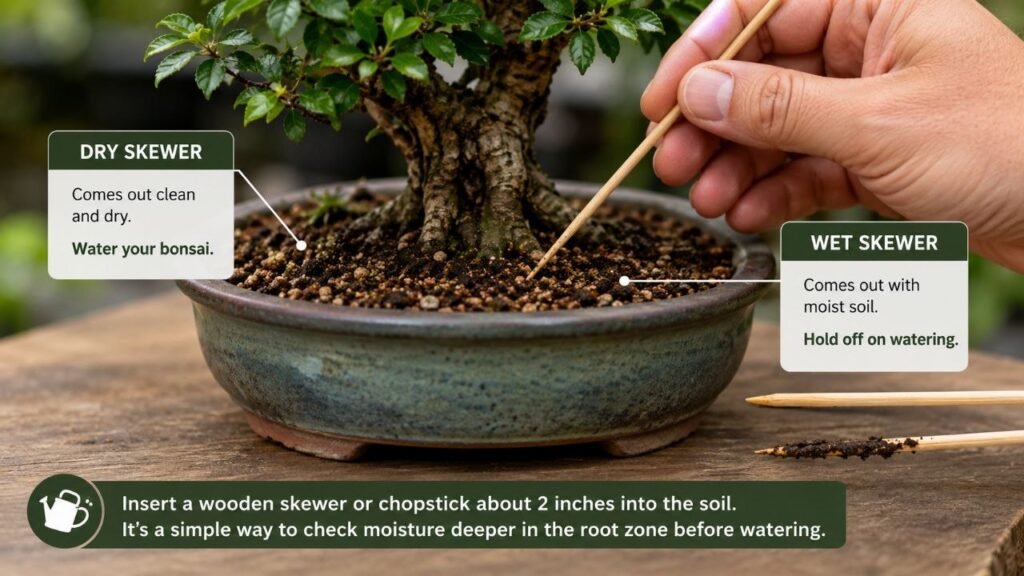
Want the fastest way to check? Grab a wooden skewer, push it into the soil near the roots, and pull it back out. Dry and clean means go ahead and water. If soil clings to it and feels damp, put the watering can down. Thirst is almost never the actual problem at that point.
Light Problems Can Trick You Into Blaming Water
Ficus is the worst offender here. Move it a few feet across the room, let the temperature drop a couple degrees, or park it near a cold draft, and it’ll drop or yellow leaves within days. Not because anything is actually wrong with the tree. It’s just reacting to change, the way some people get cranky when their routine shifts.
Without enough light, a leaf can’t produce chlorophyll fast enough to keep up with what naturally breaks down, so it slowly fades toward yellow. This usually shows up first in new growth or in whatever leaves sit furthest from the window.
Too much harsh direct sun causes something that looks similar on the surface but isn’t the same thing at all. You’ll see patchy yellow or bleached spots facing the light source, rather than an even overall fade. Think sunburn, not deficiency.
Nutrients: Two Problems That Wear the Same Disguise
Bonsai pots hold very little soil, so nitrogen runs out faster than most people expect, myself included. When that happens, the tree pulls nitrogen out of its oldest leaves first and sends it toward new growth. That’s exactly why nitrogen deficiency shows up in the older leaves before anywhere else.
Iron chlorosis looks completely different. Yellow leaf, green veins, a net-like pattern, usually showing up on new growth. It’s often tied to high soil pH. Alkaline soil locks up iron that’s already sitting right there, so the tree simply can’t absorb it. Hard tap water can nudge your soil in that direction over time too.
Here’s the part that actually trips people up. A balanced liquid fertilizer clears up a nitrogen shortfall pretty reliably. It does almost nothing for iron chlorosis. If pH is the real issue, dumping in more fertilizer just sits there uselessly. You need a chelated iron feed or a pH correction instead. One more thing worth saying twice: don’t fertilize a tree that’s already stressed from overwatering. Fix the water first, always.
Pests and Disease, Ruled In or Out Fast
Spider mites leave fine webbing and speckled yellow leaves, and they get worse in dry indoor air. Check under the leaves, not on top.
Scale insects show up as small brown bumps on the stems, often with a sticky residue on the leaves below them.
Root rot means soft, dark, mushy roots and a sour smell, usually after weeks of soil staying too wet.
Fungal or bacterial issues tend to show as yellowing with spotting, wilting, or dieback that’s isolated to one branch instead of spread evenly.
Root rot is the one to take most seriously. By the time you can see it in the leaves, it’s usually already well established underground. Spider mites and scale respond well to insecticidal soap or diluted neem oil, but you need to treat the whole tree early, not just the spots you can see.
Funnily enough, fungal problems are often a symptom rather than the actual root cause. A tree already weakened by bad drainage becomes easy prey for something a healthy tree would’ve shrugged off on its own. That’s why fixing the water and light situation usually matters more than reaching straight for a fungicide.
Different Species, Different Timelines
A ficus overreacts to almost everything. New spot, cold draft, a run of darker days, and it’ll show you within days. Alarming to watch, but rarely serious on its own.
Pines and junipers are the slow burners. Mine took nearly three weeks to show any visible change after a stress event, which honestly had me convinced it was already dead. They can carry a problem quietly for weeks, so yellowing on a pine deserves to be taken seriously, though it’s still worth ruling out normal old needle drop or seasonal change before assuming the worst.
Chinese elm sits somewhere in the middle. It reacts fast and recovers fast once you fix whatever caused the problem. That’s a big reason it’s such a common first tree for beginners. Bottom line, know your species before deciding how urgently to panic.
A Practical Timeline for When to Actually Worry
A few older leaves fading over one or two weeks means you leave it alone and just watch. A large chunk of the canopy going yellow within a week, especially new growth, means you check the roots that same day, not tomorrow. And if yellowing keeps going after a change you made has had enough time to work, that change probably wasn’t the real cause. Go back through the checklist instead of piling a second variable on top of the first.
That last scenario is where most people get stuck, myself included back in the day. Cut back watering, see no change after two days, panic, and then also start fertilizing and moving the tree around. Now there’s no way to know which change actually did anything.
A Few Other Causes That Don’t Fit Neatly Anywhere Else
A cold draft from a window or vent can yellow and drop leaves on a sensitive species within days, even if everything else about your care routine is spot on. Moving a tree constantly between rooms causes something similar. Bonsai generally like a stable spot, and shuffling it around is its own stress.
Some yellowing after repotting is expected while the roots recover, and it usually settles within a few weeks if you give it light shade and steady moisture. Fertilizer burn is its own separate thing. Overfeeding, or feeding into dry soil, tends to scorch the leaf edges rather than fade the whole leaf.
What to Actually Do Right Now
Start with the skewer test. Damp soil means stop watering and go inspect the roots. Dry soil means water deeply and check back in a few days. If moisture seems fine, look at the light next, and think back on whether you’ve moved the tree recently. Fertilizer comes last, only after you’ve ruled out water and light. Feeding a tree that’s already stressed just piles on more problems.
Make one change at a time, then leave it alone for at least a week before judging the result. Remove leaves that are fully yellow and done, they’re not coming back. But leave the partly yellow ones in place. They might still be feeding the tree while it recovers.
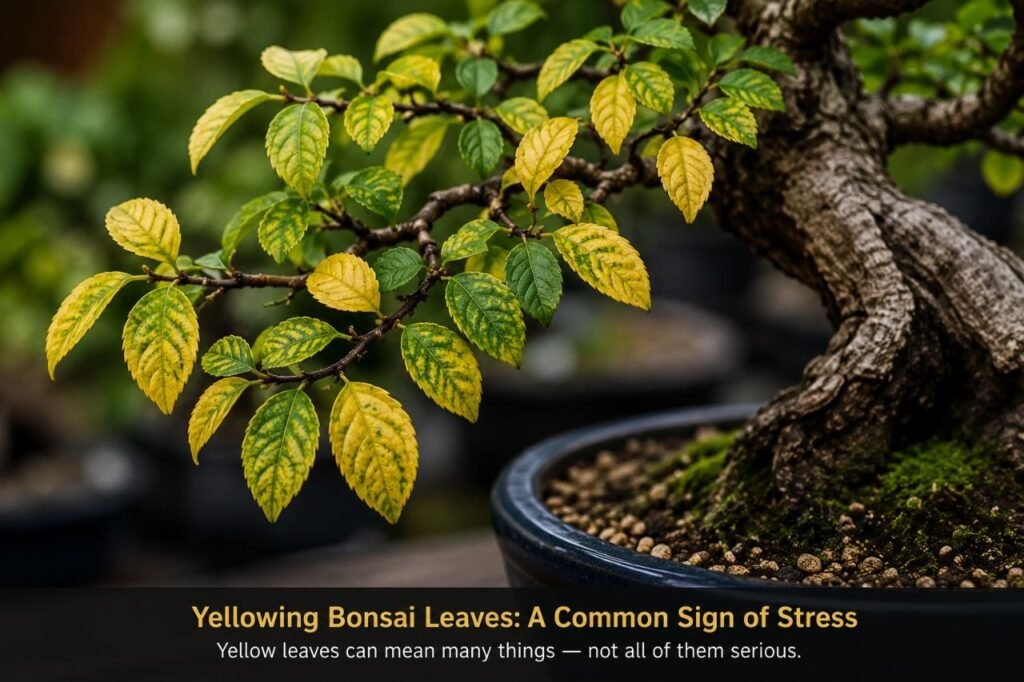
A yellow leaf on its own isn’t an emergency. It’s a signal, nothing more. Check the soil, check the light, give the tree time, and change one thing at a time. After a season or two of paying attention like this, you’ll start recognizing your own tree’s normal patterns, and most yellow leaves will stop feeling like a crisis at all.
Frequently Asked Questions
Why are my bonsai leaves turning yellow and falling off?
This usually points to overwatering or root stress rather than a single yellow leaf being anything serious. Check the soil at root depth and look for a sour smell or soft, dark roots. That points to root rot, and it needs addressing first.
Is it normal for bonsai leaves to turn yellow?
Yes, in plenty of cases. Deciduous species like Chinese elm or Japanese maple naturally yellow and drop leaves in autumn, and the occasional older leaf fading as the tree ages is normal too.
Can yellow bonsai leaves turn green again?
No. A leaf that’s fully yellowed has already lost its chlorophyll for good. Fixing the underlying cause just means the next batch of leaves grows in green.
Should I remove yellow leaves from my bonsai?
Remove the ones that are fully yellow, dry, or clearly dying. Leave the partly yellow ones alone since they may still be contributing some energy while the tree recovers.
Why are my indoor bonsai's leaves turning yellow?
Usually low light, since most indoor spots give a bonsai far less brightness than it actually needs. A recent move or a draft can do it too. Species like ficus react to that almost instantly.
What does an overwatered bonsai look like?
Soft, sometimes slightly translucent yellow leaves, often starting with the older growth first. The soil stays damp well below the surface, and there’s sometimes a musty smell once root rot has begun.

1 Comment