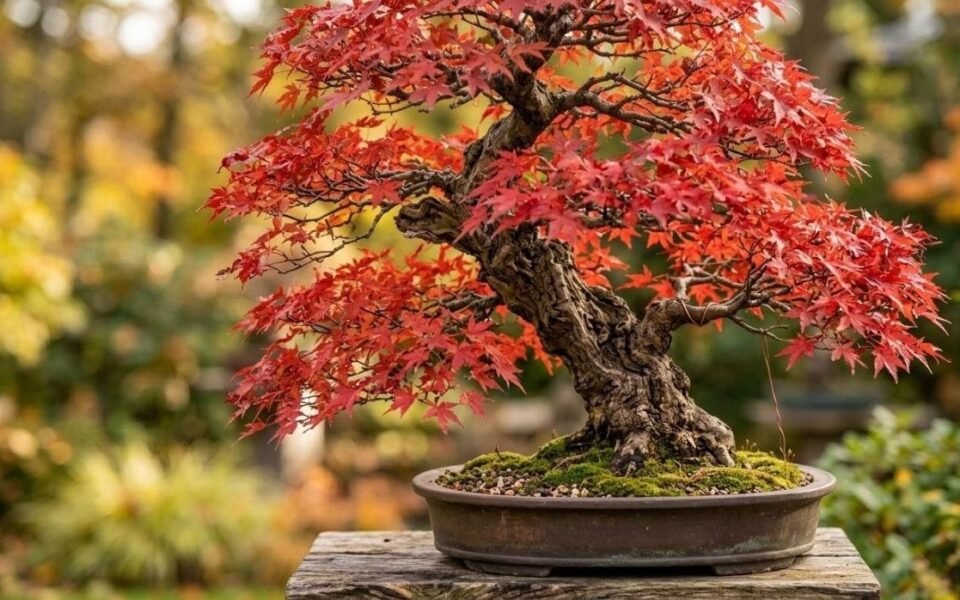
Japanese maple is one of those trees that can make a bonsai collection feel special. Its delicate leaves, fine branching, and changing colors give it something to offer in almost every season.
The tree most bonsai growers know as Japanese maple is Acer palmatum. It is a deciduous tree that loses its leaves in autumn and goes through a period of dormancy during winter. That seasonal cycle is important because this is an outdoor bonsai, not a tree that can stay indoors all year.
With the right care, an acer palmatum japanese maple bonsai can develop a beautiful trunk, fine branches, attractive surface roots, and a dense canopy of smaller leaves. It does need some extra attention, especially when it comes to strong sunlight, dry wind, watering, and wiring.
Here is what you should know before growing one as a bonsai.
Is Japanese Maple the Same as Acer Palmatum?
Yes. Acer palmatum is the botanical name for Japanese maple.
The species name comes from the Latin word for palm and refers to the shape of the leaves. The leaves are divided into several lobes that spread out in a way that can resemble an open hand.
Acer palmatum is native to Japan, Korea, and parts of China. It has been cultivated for many years, which has led to hundreds of different named varieties.
Some varieties commonly seen in bonsai collections include:
- Deshojo
- Bloodgood
- Kiyohime
- Arakawa
It is worth checking the botanical name when buying a Japanese maple because not every tree sold under that common name is actually Acer palmatum.
For example, Acer japonicum is a related species, and some garden varieties are hybrids developed mainly for their color or landscape appearance.
For bonsai, Acer palmatum is particularly popular because it responds well to pruning, wiring, and branch development.
What Does a Healthy Japanese Maple Bonsai Look Like?
A healthy Japanese maple bonsai should have strong, clean growth and a well balanced structure.
The leaves should look fresh and healthy, while the branches should have enough space between them to allow light and air into the canopy. With regular training, the tree can gradually develop smaller leaves and a much finer network of branches than an untrained nursery tree.
The bark also deserves attention. Japanese maple has relatively delicate bark, which means it can be damaged by rough handling or incorrectly placed wire. Wire that is too tight can press into the bark as the branch grows and leave a permanent mark.
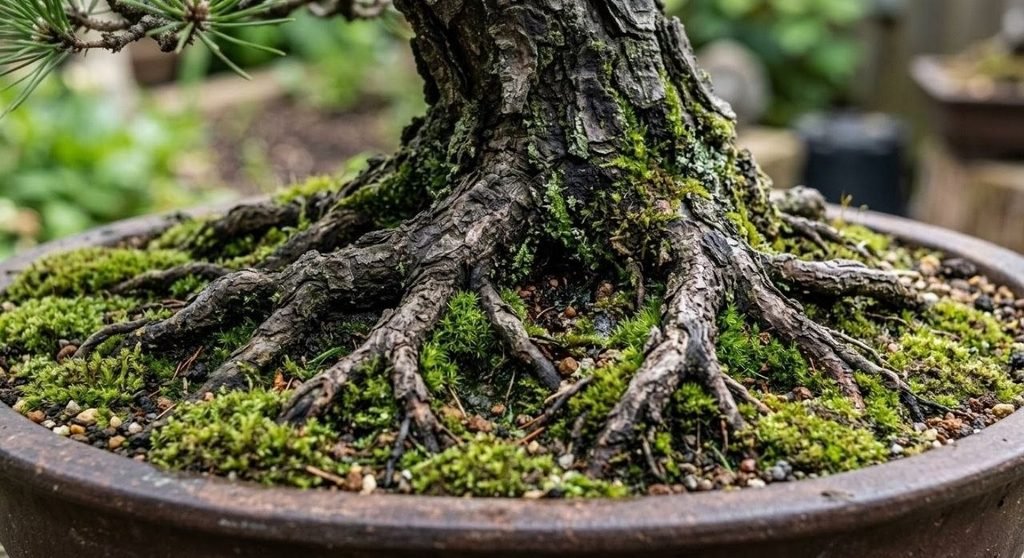
Another important feature is the base of the trunk. In bonsai, the visible surface roots are known as the nebari. Well developed surface roots spread naturally from the trunk and give the tree a stronger, older appearance.
It is also a good idea to check the underside of the leaves regularly. Aphids and other small pests can gather around the veins, where they may be difficult to notice at first.
Are Japanese Maple Bonsai Indoor or Outdoor Trees?
Japanese maple bonsai are outdoor trees.
Acer palmatum is a temperate deciduous species, so it needs natural changes in temperature and light throughout the year. It also needs a proper winter dormancy.
Keeping one indoors permanently can gradually weaken the tree, even if it appears healthy for a while.
The basic seasonal care looks like this:
| Season | Where It Belongs | What to Watch For |
|---|---|---|
| Spring | Outdoors with some protection from strong sunlight | New leaves are tender and can scorch |
| Summer | Outdoors with dappled light or afternoon shade | Strong sun and dry wind can burn the leaves |
| Autumn | Outdoors with good sunlight | Cooler weather helps develop autumn color |
| Winter | Outdoors in a sheltered location | Protect the roots from severe freezing |
During extreme winter weather, the bonsai can be moved to a cold frame, unheated garage, sheltered porch, or another protected location.
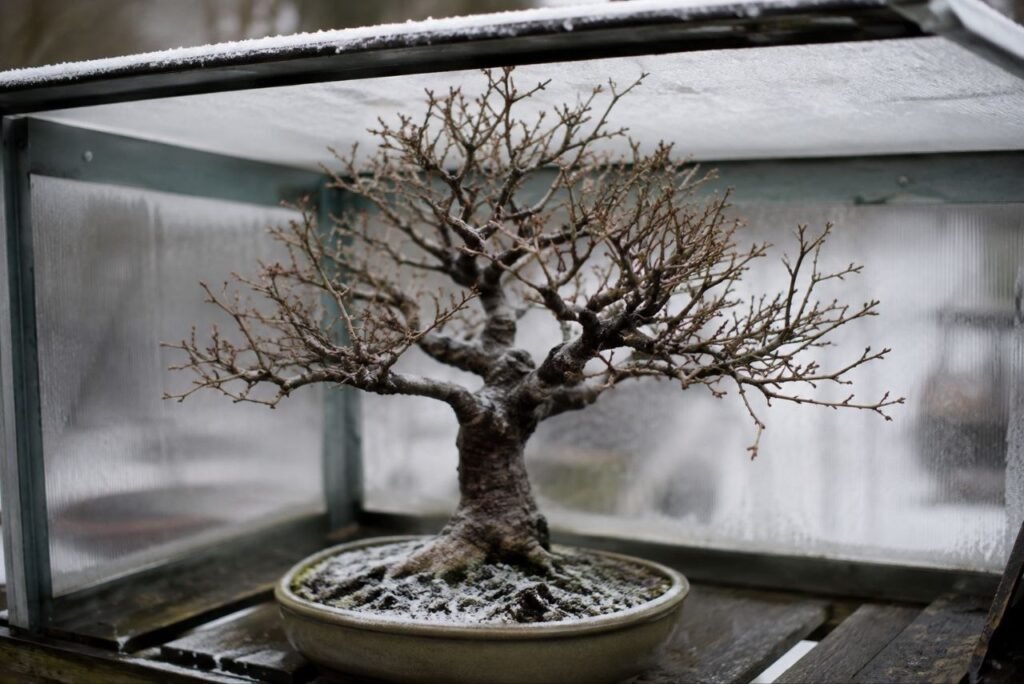
The purpose is to protect the roots and branches from extreme conditions. It should not be moved into a warm room for the whole winter because the tree still needs its natural dormancy.
Are Japanese Maples Good Bonsai Trees?
Yes. Japanese maple is an excellent choice for bonsai, especially for growers who enjoy developing fine branch structure.
One of its biggest advantages is its ability to produce a detailed network of smaller branches. With proper pruning and training, a basic branch can gradually develop into a much finer structure.
The leaves are another major attraction. Depending on the variety and season, they can provide different shades of green, red, orange, or yellow.
Japanese maple also responds well to wiring and directional pruning. These techniques can help guide branches into a natural shape while the tree is being developed.
There are, however, a few disadvantages to keep in mind.
The bark is thin and can scar easily. Wire therefore needs to be checked regularly during the growing season.
The leaves are also more sensitive than the needles of many pine and juniper species. Strong midday sunlight, hot weather, and dry wind can cause the edges of the leaves to turn brown.
This does not necessarily mean the tree is dying. Leaf damage can occur even when the tree itself remains healthy, but repeated stress can weaken it over time.
How Long Does It Take to Bonsai a Japanese Maple?
The time required depends heavily on the starting material.
A young nursery plant with a thin trunk and little branching may need three to five years just to establish a basic trunk line and primary branches.
Starting with pre bonsai material can shorten the process. If the tree already has trunk thickness, taper, movement, and some useful branches, it may begin to look like a convincing bonsai within a year or two of careful training.
Developing a refined bonsai takes much longer.
A tree with dense ramification and many fine branches can require ten years or more of continued work. Some highly developed acer palmatum japanese maple bonsai specimens have been trained for twenty years or longer.
This is why bonsai is better thought of as an ongoing process rather than a project with a fixed finishing date. The tree continues to grow, branches change, and pruning and training are adjusted from year to year.
Common Japanese Maple Bonsai Mistakes
Overwatering
Overwatering is one of the common problems with bonsai.
Japanese maple needs regular moisture, but the soil should not remain saturated for days at a time. Constantly wet soil can reduce the amount of air available to the roots and may eventually weaken the root system.
Make sure excess water can drain freely from the pot.
Underwatering
Allowing the soil to become completely dry can also cause problems.
The fine roots can suffer when the tree repeatedly dries out, and the first visible sign may be brown or crispy leaf edges.
During hot weather, check the soil regularly because a small bonsai pot can dry out quickly.
Wiring Too Tightly
Japanese maple bark does not tolerate wire marks very well.
Branches become thicker during the growing season, so wire that looks loose enough when first applied can begin cutting into the bark after a few weeks.
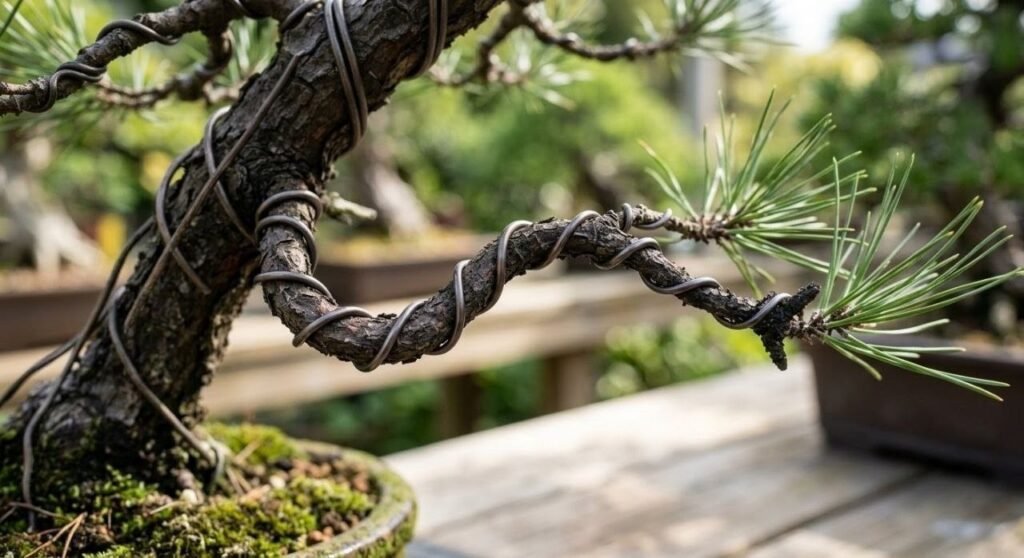
Check the wire regularly and remove it before it starts leaving deep marks.
Pruning at the Wrong Time
Timing matters when making larger cuts.
Structural pruning is generally best carried out in late winter, before the buds begin to open. During the growing season, lighter pruning and shaping are usually more appropriate.
Heavy pruning at the wrong time can cause unnecessary stress and excessive sap flow.
A Simple Seasonal Routine for Japanese Maple Bonsai
Japanese maple care becomes much easier when the work is matched to the season.
Late Winter
This is a good time to work on the basic structure before the buds open.
- Remove unwanted branches.
- Carry out major structural pruning.
- Repot the tree if it needs repotting.
- Check the overall shape before spring growth begins.
Spring
New growth appears quickly during spring, so this is a good time to pay close attention to the tree.
- Check the soil regularly.
- Water when necessary.
- Protect tender new leaves from strong sunlight.
- Watch for aphids and other pests.
- Keep an eye on new shoots and branch development.
Summer
Hot weather can be difficult for Japanese maple, especially when combined with dry wind.
- Water regularly when the tree needs it.
- Provide dappled light or afternoon shade.
- Avoid harsh midday sunlight.
- Check the leaves for signs of heat or sun damage.
- Check wiring regularly as branches thicken.
Midsummer
Keep pruning and shaping relatively light.
Small adjustments can be made when necessary, but avoid heavy structural work during periods of strong summer growth and heat.
Autumn
Autumn is when the tree naturally begins preparing for winter.
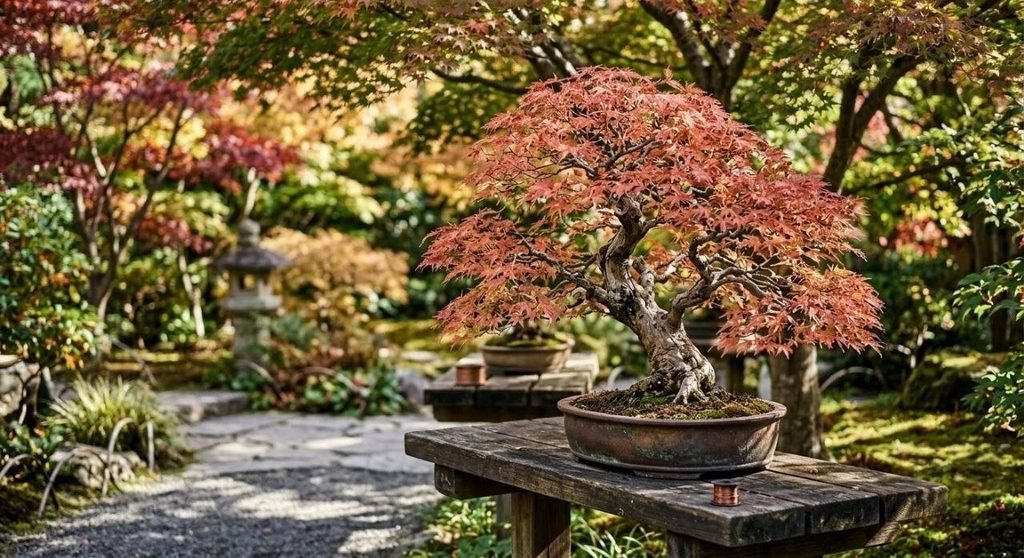
- Allow the leaves to change color naturally.
- Let the leaves fall on their own.
- Avoid unnecessary late defoliation.
- Gradually stop feeding as the tree moves toward dormancy.
Winter
The tree should remain outdoors and experience its natural winter rest.
- Protect the pot from severe freezing.
- Shelter the tree from strong winds.
- Use a cold frame or another cold sheltered location when conditions become extreme.
- Avoid keeping the tree in a warm indoor environment.
The main goal during winter is to protect the roots from extreme conditions while still allowing the tree to remain dormant.
Frequently Asked Questions
Can Japanese Maple Bonsai Be Kept Indoors?
No, not permanently.
Acer palmatum needs outdoor conditions, seasonal changes, and winter dormancy. It can be temporarily sheltered during extreme weather, but it should not be kept indoors throughout the year.
Is Acer Palmatum the Same as Japanese Maple?
Yes. Acer palmatum is the botanical name for Japanese maple.
Just remember that some plants sold as Japanese maple belong to related species or hybrids, so checking the botanical name is useful when buying a japanese acer bonsai.
Are Japanese Maples Good for Bonsai?
Yes. They are especially valued for their fine branching, attractive leaves, seasonal color, and ability to develop a detailed branch structure.
Their delicate bark and sensitivity to strong sunlight are the main areas that require extra care.
How Long Does It Take to Grow a Japanese Maple Bonsai?
There is no fixed timeline.
A young plant may take three to five years to establish its basic structure. Pre bonsai material can develop faster, while highly refined branching may take ten years or more.
Older exhibition quality trees may have been trained continuously for twenty years or longer.
Final Thoughts
Growing Acer palmatum as a bonsai is mainly about understanding the tree and giving it the right conditions at the right time.
It needs plenty of outdoor time, protection from harsh summer conditions, careful watering, and a proper winter dormancy. Pruning should be done according to the season, and wiring needs regular checking because the delicate bark can scar easily.
The biggest mistake is trying to rush the process.
A Japanese maple bonsai develops slowly. The trunk becomes stronger, branches divide into finer growth, and the overall shape improves little by little.
With consistent care and patience, Acer palmatum can become a beautiful bonsai that continues to improve for many years.

1 Comment