What Is Bonsai?
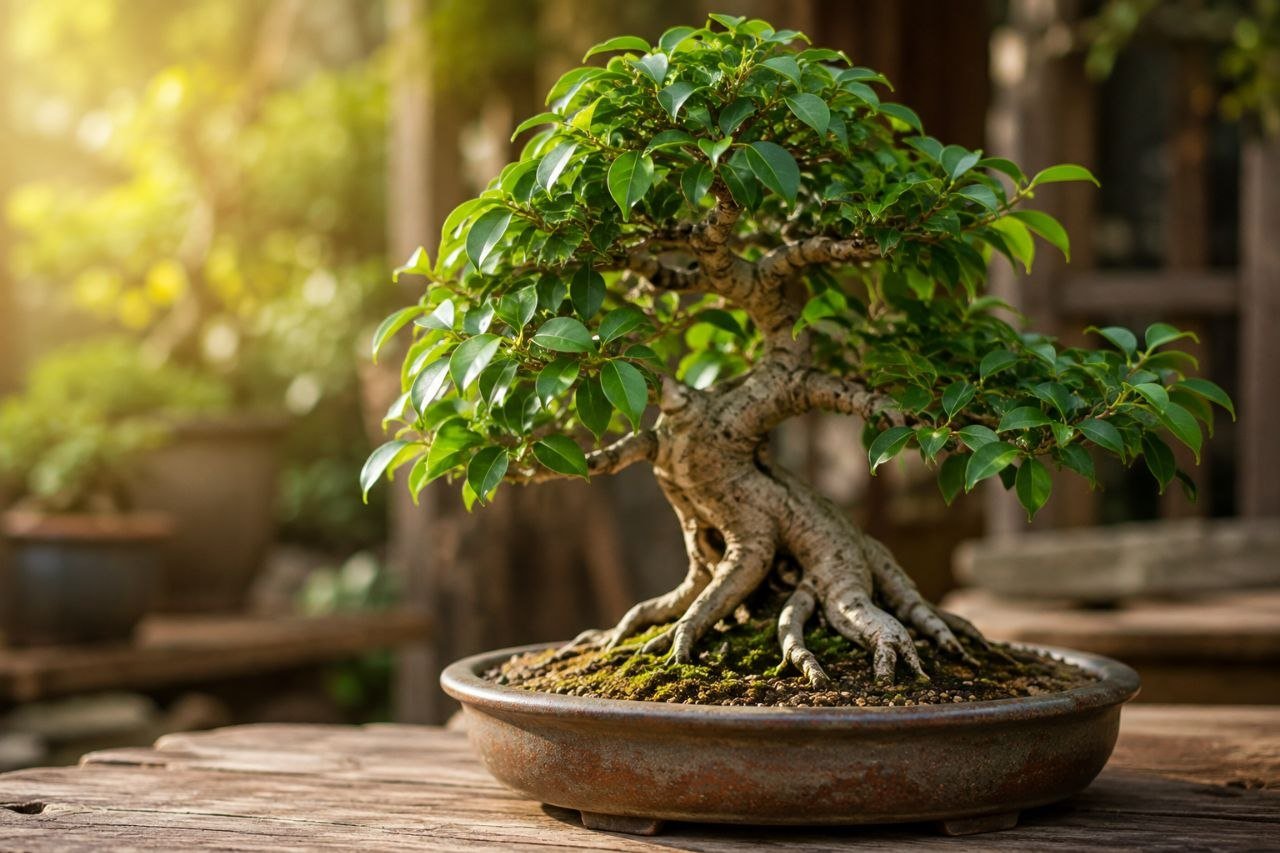
Bonsai is a Japanese word that literally means “a plant or tree grown in a tray.” As an art form, bonsai is the practice of growing trees in small containers or pots, combining horticulture, aesthetics, and patience to create a full-sized tree in miniature form — one that carries a natural, unique appearance despite its small scale.
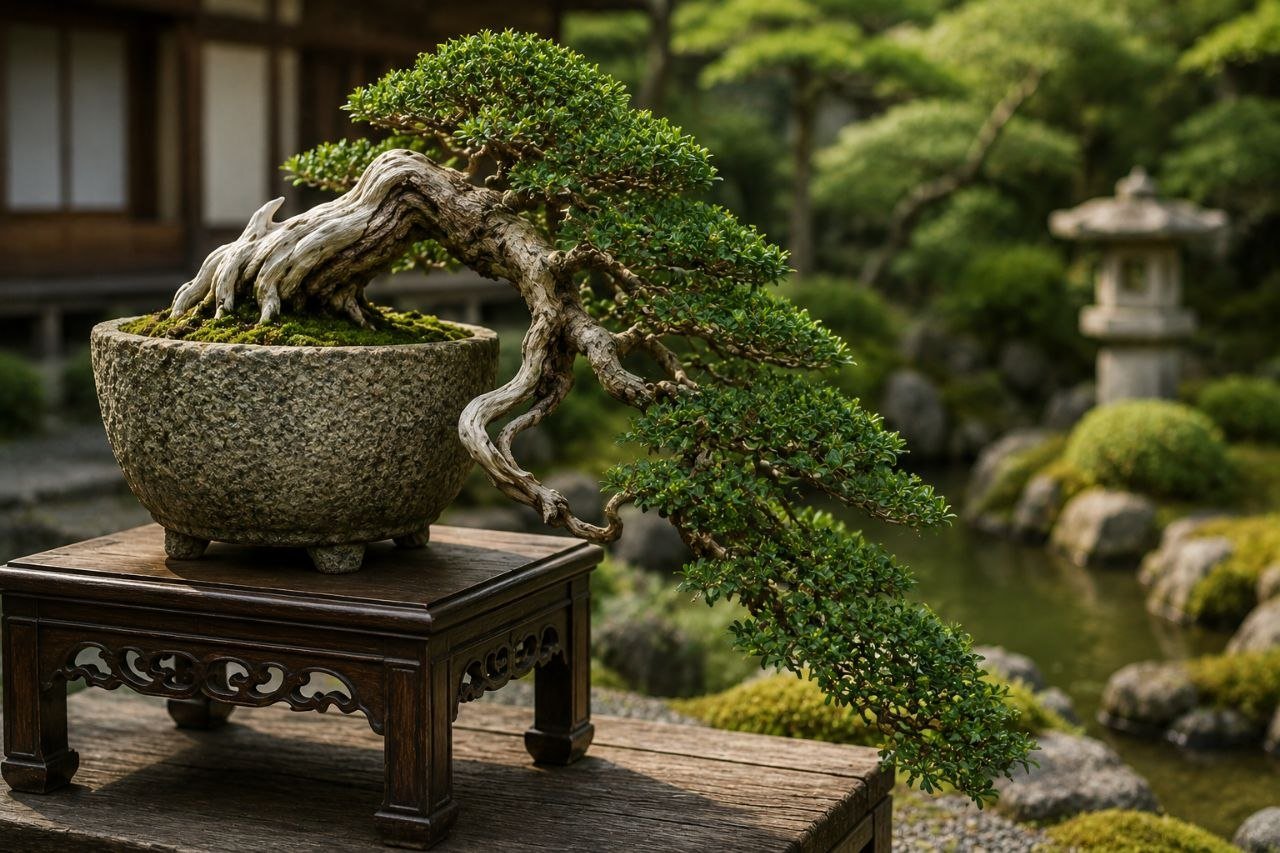
The core objective of bonsai is deceptively simple: to shape a tree so that it appears large and mature, while actually remaining small enough to fit in a container.
The Main Principles of Bonsai
Achieving a Small Size
To keep a bonsai small, the stem and branches are regularly trimmed so the plant stays in proportion to its pot and overall size.
The Look of an Old Tree
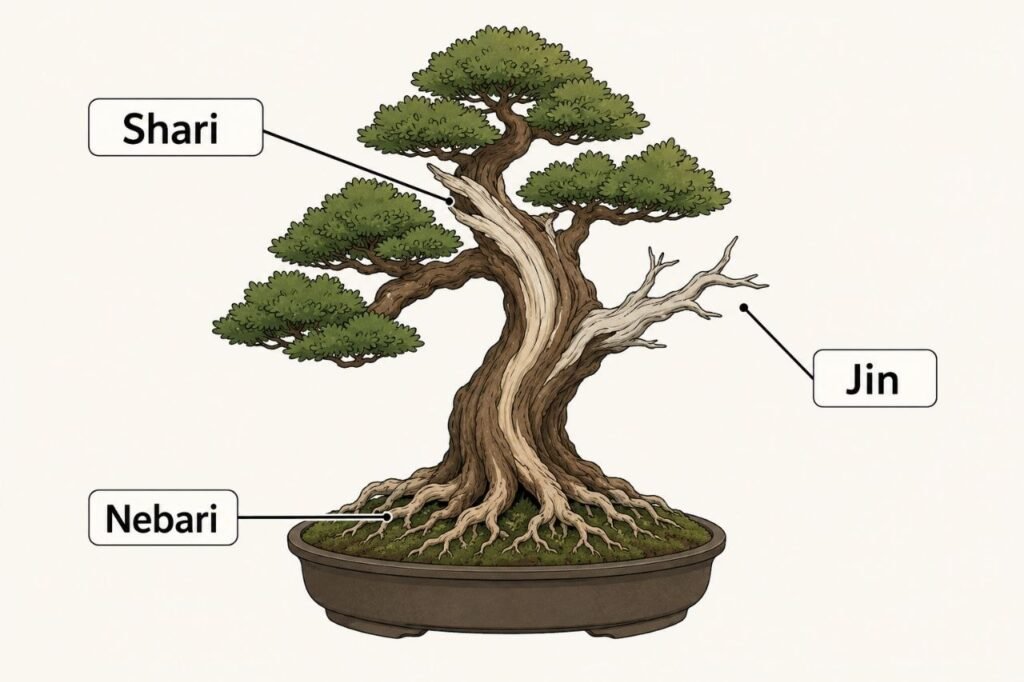
Several techniques are used to give a bonsai the appearance of an old, naturally weathered tree:
- Shari — the dry or dead wood visible on a tree’s trunk
- Nebari — the surface roots visible above the soil, spreading outward in all directions
- Jin — technique used to make a dry or dead branch look like naturally aged living wood
Balance
The beauty of a bonsai comes from its sense of spaciousness and its triangular structure — the way branches and foliage are distributed to create visual harmony.
Essential Care for Bonsai Trees
Light
Most bonsai trees need about 4 to 6 hours of direct sunlight each day. That said, some species — like Ficus and Jade — can tolerate lower light conditions, making them more forgiving for indoor growers.
Watering
Getting the water balance right is one of the most important parts of bonsai care. Both overwatering and underwatering can harm the tree.
Check the soil every day — if the surface feels slightly dry, it’s time to water. Avoid watering on a fixed schedule; let the soil’s condition guide you instead.
Soil
Bonsai soil needs to allow water to drain through easily. Common additions to a good bonsai soil mix include:
- Akadama — red clay
- Kanuma — acidic clay
- Pumice — a lightweight, water-absorbent material
Fertilizer
Why fertilizer matters: Bonsai trees grow in small pots, which means the nutrients in the soil get used up quickly. Regular fertilizing is essential to keep the tree healthy.
Types of fertilizer:
- Organic fertilizers (compost, cow dung fertilizer, fish emulsion) — slower but safer
- Chemical fertilizers — faster-acting, but should be used with caution
Every fertilizer package lists three numbers, like 10-10-10, representing the main nutrients:
- N (Nitrogen) → supports leaf and branch growth, keeps the plant green
- P (Phosphorus) → supports root growth and flower/fruit formation
- K (Potassium) → supports overall plant health and disease resistance
When to fertilize:
- Spring through summer — every 2–4 weeks
- Autumn — in smaller quantities
- Winter — avoid fertilizing entirely, since the tree is dormant
Special notes:
- Don’t fertilize a newly planted or freshly repotted bonsai for 4–6 weeks
- Don’t fertilize sick or weak plants
- Over-fertilizing can cause root rot
- Always fertilize soil that’s already been watered — never dry soil
Pruning
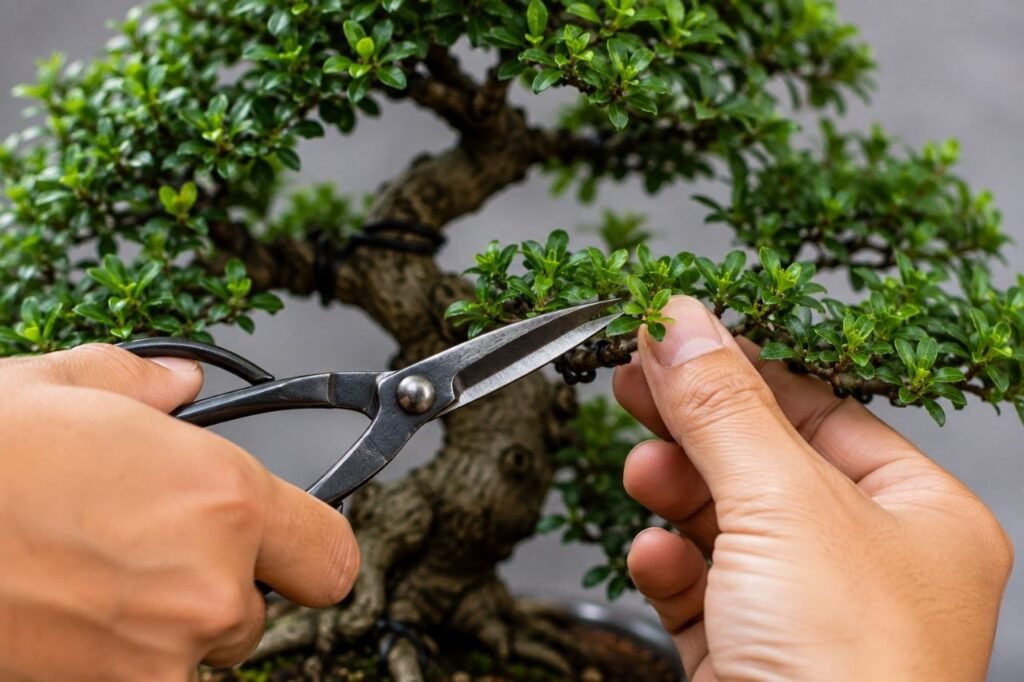
What is pruning? Pruning means cutting off excess branches, leaves, or roots to keep a bonsai’s size and shape under control.
Types of pruning:
- Branch pruning — removing excess or awkwardly directed branches
- Leaf pruning / defoliation — encourages smaller, denser leaves
- Root pruning — removing excess roots during repotting
Benefits of pruning:
- Creates a more balanced, beautiful tree shape
- Encourages thicker growth of new branches and leaves
- Redirects the tree’s energy where it’s needed most
- Removing diseased or dead branches keeps the tree healthy overall
When to prune: Spring and summer are generally the best times for light pruning. Heavier pruning is best done in late winter or just before spring begins.
Caution: Always use sharp, clean tools, and avoid pruning too much at once — over-pruning can weaken the tree.
Wiring a Bonsai
What is wiring? Wiring involves wrapping metal wire around branches and trunks so they can be gently bent into a desired shape.
Wires commonly used:
- Aluminum wire — good for softwood trees, easier for beginners
- Copper wire — used for hardwood trees, provides a stronger hold
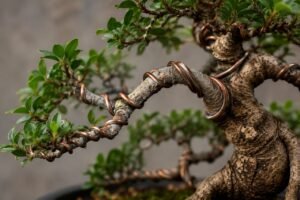
How wiring is done:
- Start at the base of the stem and wrap the wire at roughly a 45-degree angle.
- Avoid wrapping too tightly, as this can damage the bark.
- Bend branches slowly — bending too quickly can snap them.
Benefits of wiring: Wiring lets you shape branches into virtually any direction, giving the tree a natural, artistic look in styles like cascade, upright, or slanting.
Things to keep in mind:
- Don’t leave wire on too long — it can eventually cut into the branch’s bark.
- Typically, remove wire after 3–6 months, depending on the tree’s growth rate.
- Copper wire can rust in rainy or humid weather.
Best Bonsai Species for Beginners
1. Ficus — The easiest and most recommended starter variety. Thrives both indoors and outdoors, and is forgiving of low water or low humidity.
2. Jade Plant — A succulent that stores water, requiring very little maintenance. It can easily survive even if you occasionally forget to water it.
3. Chinese Elm — Grows quickly and responds well to pruning. Its small leaves create a naturally beautiful bonsai shape, and it does well both indoors and outdoors.
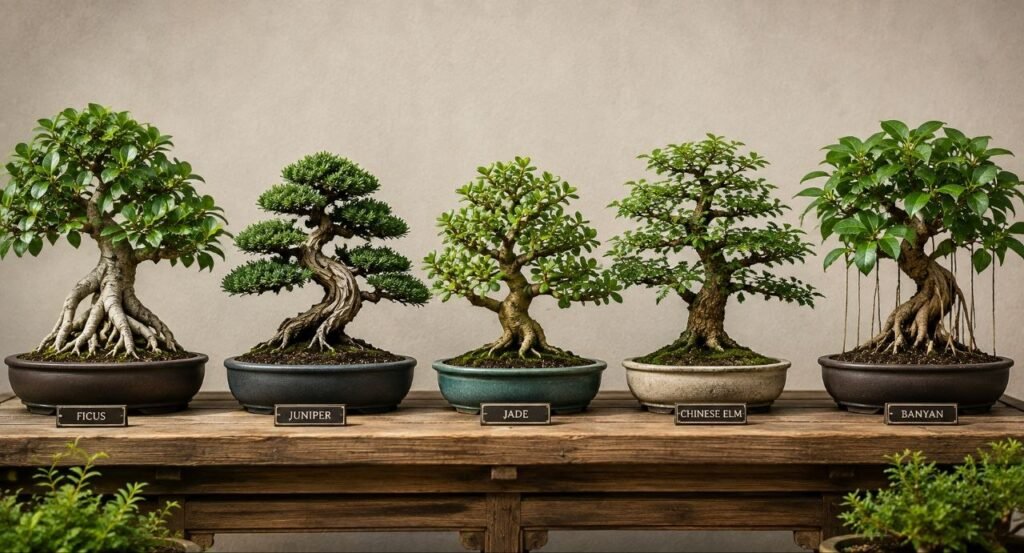
4. Money Plant (Portulacaria) — Very hardy and does well with low water. Highly tolerant of beginner mistakes.
5. Bougainvillea — Produces beautiful, colorful flowers and thrives in warm climates. Prefers bright sunlight.
6. Banyan (Bohar) — Easily available in India, known for its strong roots and striking appearance. Grows well in hot climates.
Tip for first-timers: If this is your first bonsai, start with a Ficus or Jade. Both are forgiving of mistakes and give you a great foundation for learning the craft.
Common Bonsai Mistakes to Avoid
1. Overwatering — The most common mistake, and it leads to root rot. Solution: Water only when the soil feels dry — not on a fixed daily schedule.
2. Underwatering — Causes leaves to dry out and fall off. Solution: Be especially careful during summer, and never let the soil dry out completely.
3. Wrong placement — Keeping a bonsai in a spot that’s too dark or in harsh direct sunlight can damage it. Solution: Choose a spot with the right amount of light for that specific species.
4. Over-pruning — Cutting too many branches at once weakens the tree. Solution: Prune gradually and give the tree time to recover between sessions.
5. Choosing the wrong pot — Using a pot that’s too big or too small disrupts growth. Solution: Choose a pot sized correctly for the tree, with proper drainage holes.
6. Leaving wire on too long — Wire left too long cuts into the branch and leaves marks. Solution: Check the wire every 2–3 months.
7. Improper fertilizing — Too much fertilizer can cause root rot; too little can stunt growth. Solution: Fertilize at the right time, in the right amount.
8. Repotting too early — Repotting a newly planted bonsai too frequently stresses the tree. Solution: Repot only every 2–3 years as a general rule.
9. Impatience — Rushing to make a bonsai look “finished” quickly. Solution: Remember, bonsai is an art of patience — it improves with years, not weeks.
How Long Does a Bonsai Live?
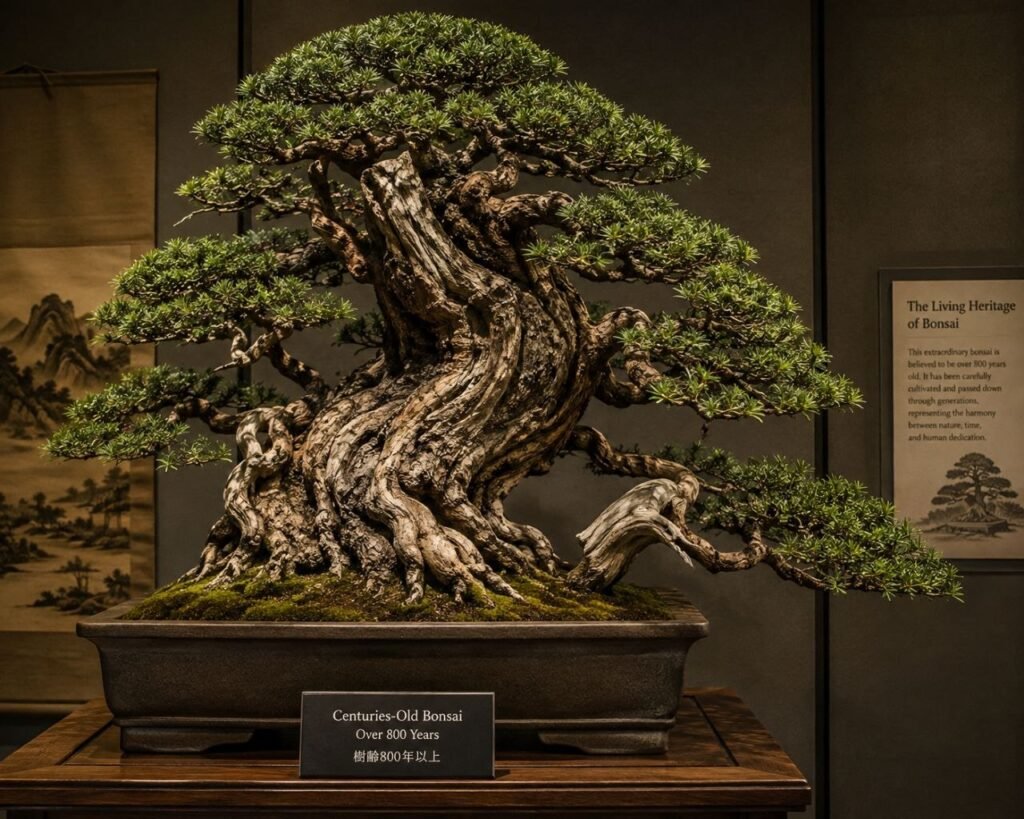
There’s no fixed age limit for a bonsai. With proper care, a bonsai can live for hundreds of years — because it’s a real, living tree, simply kept smaller through consistent training.
Lifespan depends on:
- Species — some trees are naturally long-lived, like Pine, Juniper, and Banyan
- Quality of care — consistent watering, sunlight, fertilizing, and repotting
- Environment — stable, appropriate growing conditions
Famous examples: Some bonsai trees in Japan are 400–800 years old, passed down from generation to generation as family heirlooms.
Special point:
A bonsai’s lifespan is no shorter than that of a full-sized tree of the same species — being small doesn’t mean living less. With the right care, a single bonsai can outlive the person who first planted it, which is exactly why bonsai is often called a “living art.”

3 Comments